
What is Palantir - Part 1
 Written byRahul Garg
Most enterprise AI is anchored to a single vendor's data model. Palantir starts somewhere different: a live representation of your entire business that humans and agents can reason over together.
I've spent 18 years delivering enterprise software. Not just selling it. Building it. ServiceNow mostly, across governments, banks, and large commercial enterprises.
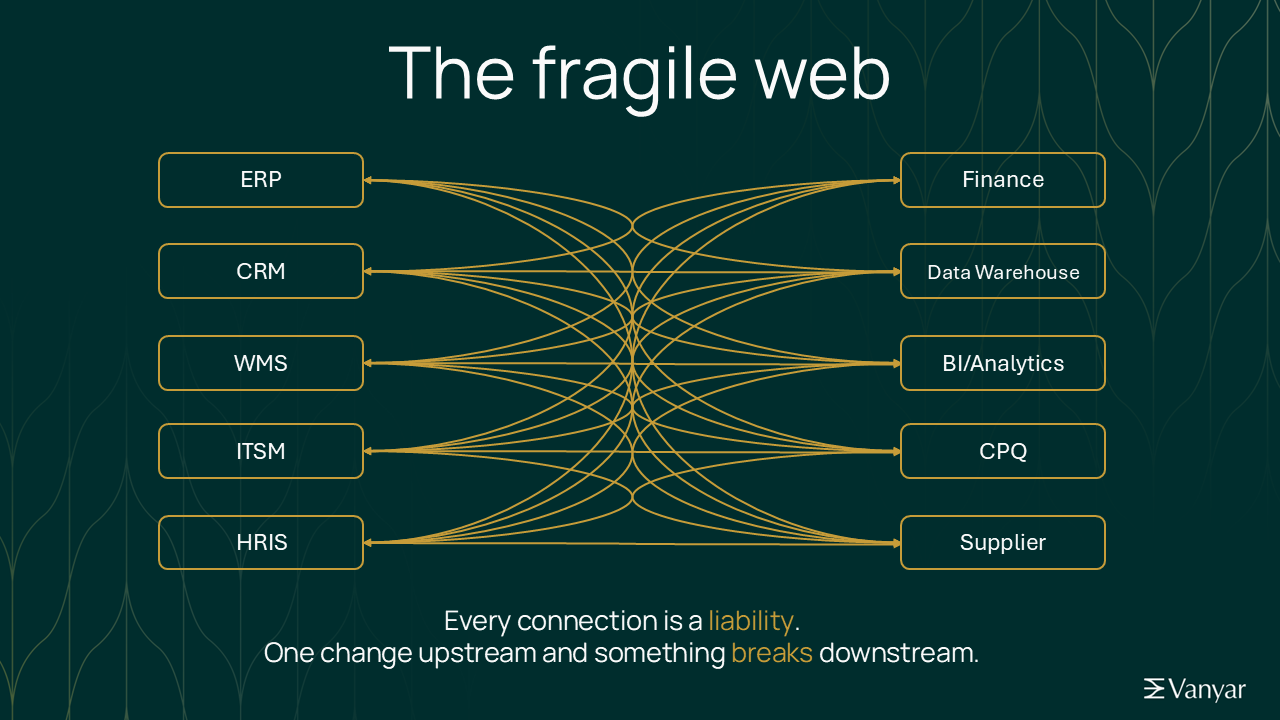
A few years ago, I was working with a large government agency. We had to pull data from four separate agencies and connect with many more upstream and downstream systems. Each had its own schema, its own owners, its own update cycle.
What we ended up with wasn't an integrated system. It was a web. Fragile in both directions. An upstream agency changes a field and something breaks downstream. We did good work on that project. But the architecture underneath was held together by agreements between people who wouldn't always be there.
And then someone asked: where do we apply AI to this?
The wrong answer is to add AI to each system separately and hope the outputs line up.
Siloed AI is just faster siloed thinking.
The pattern is everywhere
ServiceNow, Microsoft, SAP. They all ship AI that reaches across systems now. But each one is anchored to its own data model. Everything else is a side call, not a first-class object. Salesforce will always understand your CRM better than your ERP. By design.
In late 2024, Satya Nadella told Bill Gurley on the BG2 podcast: "The business logic is all going to these agents... all the logic will be in the AI tier." He's right about the direction. But an AI tier built on any one vendor's data model will always reflect that vendor's version of your business.
Palantir has no CRM to protect. No ERP to sell. It's a system of decision, not a system of records. Decisions are modelled, governed, and written back into the systems that execute them. Data sources are treated as equals. Decisions made on top of that representation don't belong to any one vendor's stack.
Most platforms start with an application and extend outward. Palantir starts with a representation of the business itself and connects systems into it.
What Palantir is
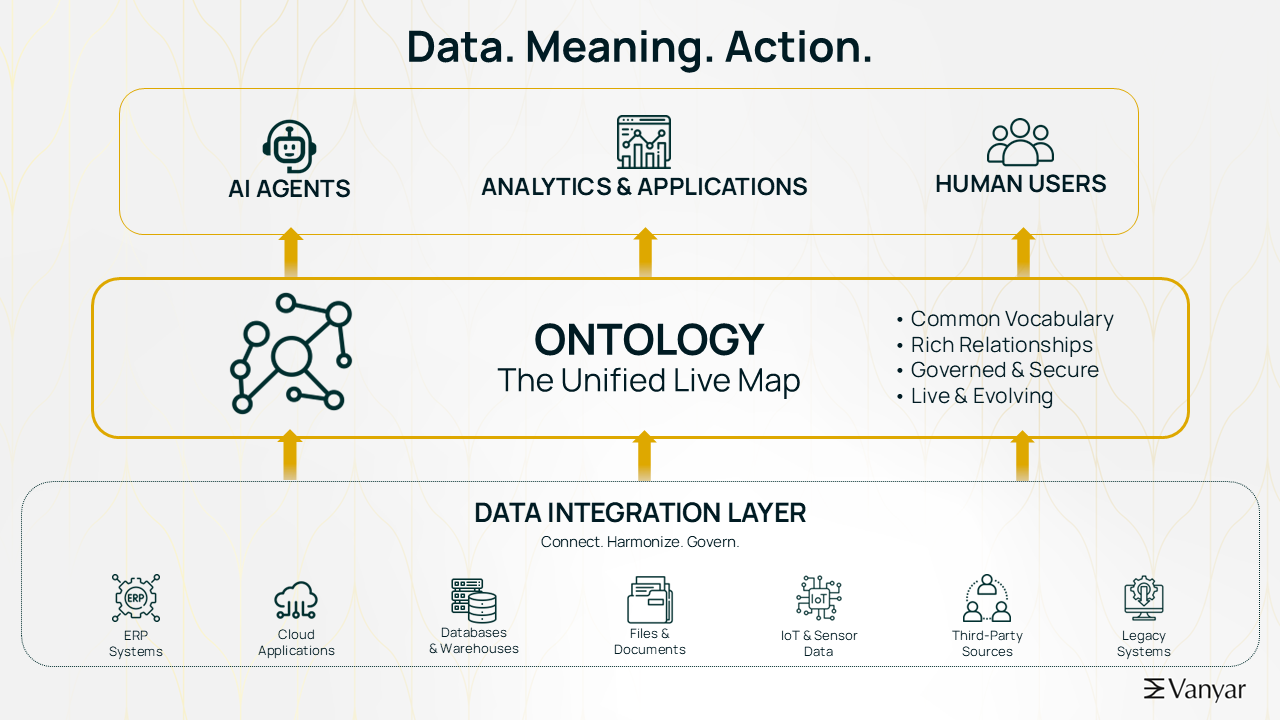
Before AI can work across a business, there must be a unified representation of the business that everything can reason over. Not a data warehouse that snapshots the past. A live map of the business that humans and agents can query and act on. Palantir is that layer.
Data integration is where it starts. Palantir ships native connectors for ERPs, CRMs, WMS, IoT sensors, streaming feeds, unstructured documents. Data can be replicated into Foundry or queried in place, depending on residency, latency, and governance needs. Your systems stay where they are.
The Ontology is the core of the platform. It's a live model of your business, built on objects and relationships, not tables. A supplier is an object connected to purchase orders, inventory positions, production schedules, and the people who manage it. Business logic, rules, constraints, workflows, all of it lives here against the model, not scattered across system customisations. Every action on any object is governed by permissions and logged. Security and access controls apply to AI agents the same way they apply to people. Decisions can be proposed, staged, and approved before they execute back into the systems that run the business.
AIP (AI Platform) is the action layer. Agents reason across the full Ontology, not just one system's slice, and workflows trigger actions that write decisions back to operational systems.
What this changes
Palantir doesn't replace your ERP, CRM, or ITSM (If you don’t want, more on this in later posts). They stay where they are.
The real shift is velocity. When business logic lives in the Ontology and is not buried inside an ERP customisation, you change a rule in hours, not in the next upgrade cycle. A new compliance requirement or pricing policy can be built and deployed against the model, not negotiated with three system vendors.
The AI tier requires a shared semantic foundation that no single vendor owns. Connectivity alone doesn't get you there.
What's next
The theory is clean. Enterprise data is a mess. Next: how Foundry actually pipelines data from systems.